
Social media management guides
View all guides
Setting social media goals worth having
One goal, one number, one quarter. Everything else is a dashboard that hides whether it is working.

How to audit social accounts you inherited
Inherited accounts come with assumptions. An audit replaces them with a small number of facts you can act on.

Choosing the right platforms for your brand
Be where your buyers are and where you can produce the format that platform rewards. The second half is what gets skipped.

Building a social media strategy that fits your team
A strategy that ignores how many hours you actually have is a wish list. Start from capacity, not from ambition.

What social media management actually involves
Planning, production, publishing and measurement are four jobs. Most accounts stall because only the third one ever gets put in somebody's calendar.
Content, growth and paid social
View all content guides
Repurposing one shoot across several platforms
Reformatting is not repurposing. Rebuild the idea for each platform or it will read as a cross-post everywhere.

A brand voice anyone on the team can write in
A voice document full of adjectives helps nobody. Examples and a short do-not list do.

Writing captions that earn the click
The first line decides whether the rest is read. Everything after it should answer, not decorate.
Short-form video without a studio
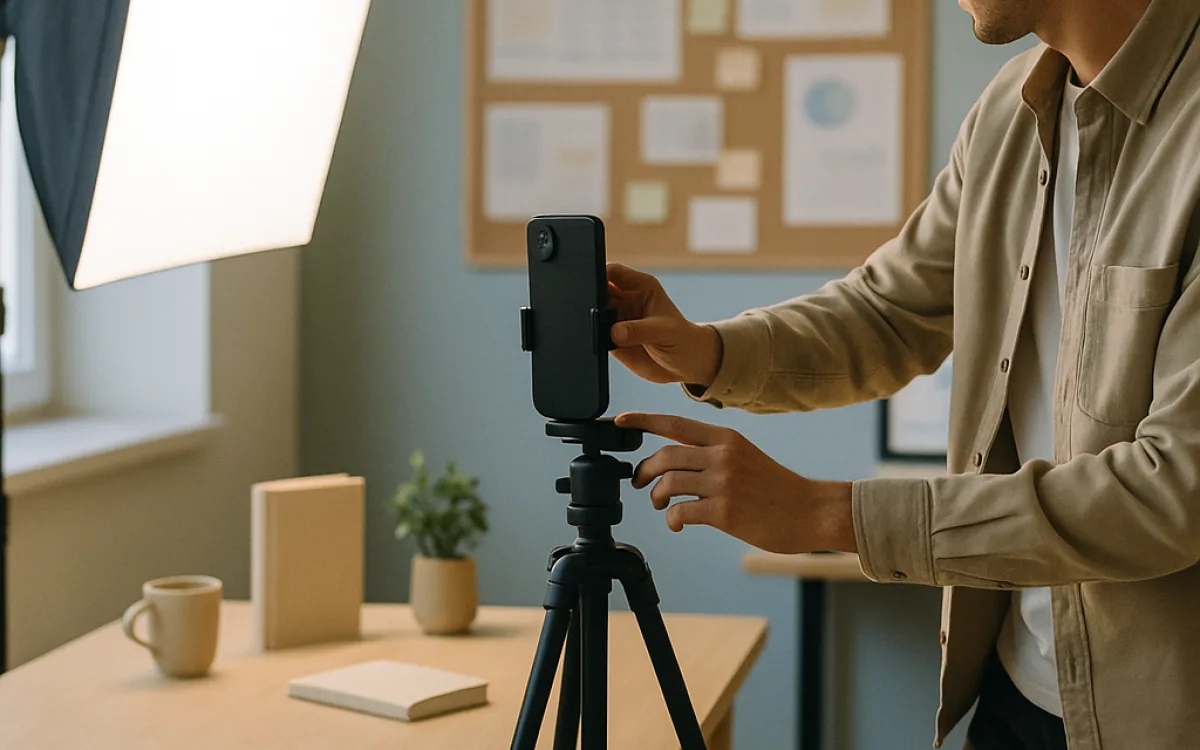
A phone, a window and one repeatable setup beat expensive equipment used twice. Consistency is a production problem.
Explore more social media guides
In-depth guides on planning, production, community and measurement, so you build the routine your team can hold instead of the one a case study promised.
Browse all guidesEvery guide we publish Get a planTell us what you are posting now
Why read us first
- Every guide is written and reviewed in house by people who manage brand accounts, and carries the date of its last review.
- No scheduling tool, agency or platform partner can pay for a mention, a ranking or a link here.
- We give you the workflow and the honest effort it takes, not a screenshot of somebody else's good month.
- Each guide says where the approach breaks down, which is usually the more useful half.
- Every guide exists in twelve languages with its own URL, not a machine pop-up.
- Nothing is behind a signup: no email wall, no locked chapters, no upsell.
Frequently asked questions
What does social media management actually involve?
Social media management is four jobs that people usually mistake for one. Planning: deciding which platforms you serve, what you will say and how often, and writing it into a calendar somebody can work from. Production: getting the photos, video and copy made, which is the part that quietly eats the week. Publishing and community: posting on schedule and then answering what comes back, in public and in the inbox. Measurement: knowing which posts moved something that matters to the business. Most accounts stall because the first and second jobs are treated as free, and only the third is put in someone's diary.
How often should we post?
Often enough to be recognised, rarely enough that the quality holds — for most small teams that is two or three times a week per platform, not daily on five. The honest constraint is production capacity, not the algorithm: a schedule you can only sustain for a month teaches your audience to expect something you will stop delivering. Pick the frequency you can hold in your busiest month, not your quietest, and add to it only once a filming and editing routine exists. Consistency at a lower frequency beats a burst followed by silence, both for the audience and for the people doing the work.
Which platforms should we be on?
The ones where your buyers already are, and where you can produce the format that platform rewards. That second half is what gets skipped: a platform built on short-form video is a video commitment, and joining it without anyone to film is how accounts end up posting reformatted stills that reach nobody. Two platforms served properly will beat five neglected ones every time. Audit honestly once a year: if a channel has not produced attention, enquiries or useful conversation in six months and nobody enjoys running it, closing it is a legitimate decision, not a failure.
How much does social media management cost?
It depends on whether you are buying publishing or production. A freelancer scheduling and replying on two platforms typically runs $500 to $2,000 a month. Add content production — filming days, editing, design — and $2,000 to $8,000 a month is the common range for a small brand. Full agency management with paid social usually starts above that, plus the ad budget itself, which is separate and should never be folded into the fee. In house, the real cost is time: budget a realistic number of hours a week for production, or the calendar quietly becomes reposting.
Which numbers actually matter?
The ones that connect to the business, and a couple of leading indicators that tell you why. Follower count is the weakest number on the page: it moves slowly, it is easy to inflate, and it says nothing about whether anyone bought. Watch reach or views for whether you are being seen at all, saves and shares for whether the content earned anything, and clicks, enquiries and sales for whether attention turned into money. Report a small set consistently over months. A dashboard with forty metrics is not measurement; it is a way of avoiding the one number that did not move.
Should we hire in house, use a freelancer, or an agency?
Hire in house when your content depends on daily access to the product, the workshop or the people — nobody outside can film what happens in your building. Use a freelancer when the work is steady but small, and you mainly need consistency and a reliable inbox. Use an agency when you need several skills at once — strategy, video, paid social, reporting — or when you need to move quickly and have the budget for it. Whichever you choose, the failure mode is the same: hiring someone to publish while leaving production unassigned, then wondering why the calendar is full of stock photos.